
Why Every Missed Call Is a Lost Referral (And How to Fix It)
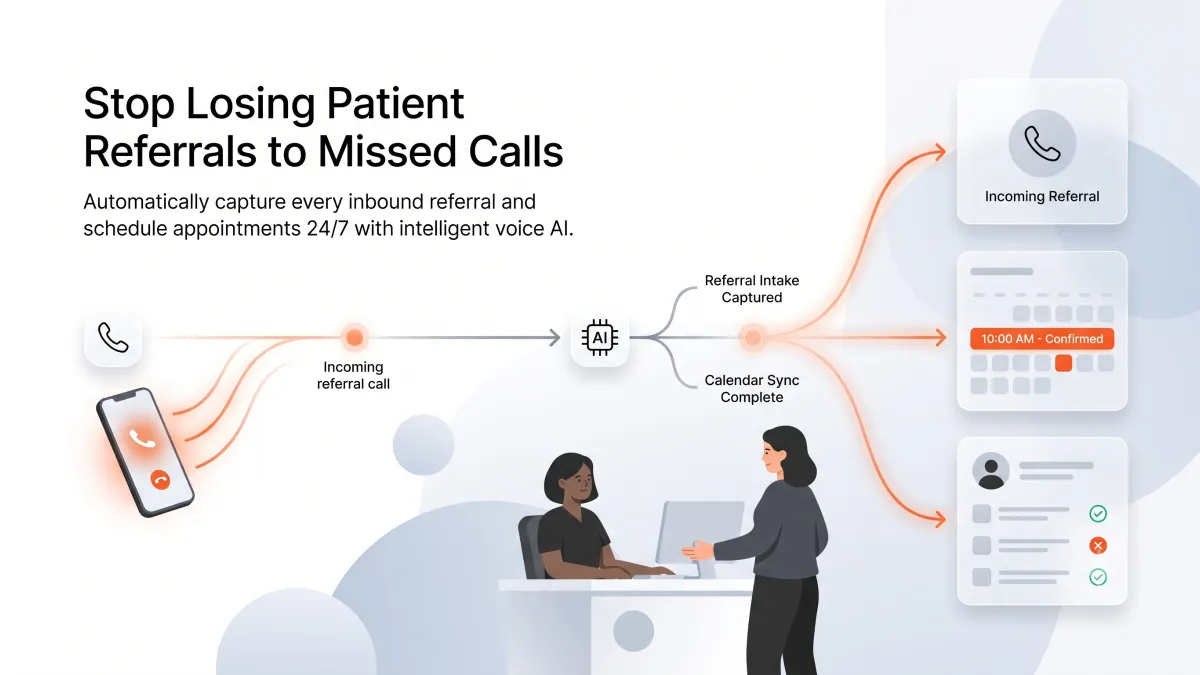
Missed phone calls are the primary cause of lost patient referrals and leaked revenue in independent medical practices. When referring physicians send patients your way, those patients expect immediate access; if they hit voicemail or suffer long hold times, they regularly seek care elsewhere or return to their primary doctor for a new referral. By implementing modern AI phone systems to handle inbound call volume 24/7, practices can capture every incoming referral, remove phone strain from front desk staff, and protect critical provider relationships.
When an independent medical practice loses a patient, the loss rarely happens in the exam room. It happens on the phone. A prospective patient calls to schedule an initial consultation, encounters a busy signal or an extended hold time, hangs up, and contacts the next provider on their list.
For medical practices, referral traffic represents the most valuable channel for patient acquisition. Whether a referral comes from a primary care physician, a specialist, or a satisfied friend, that patient reaches out with built-in trust and high intent. Yet, operational friction at the front desk frequently breaks this chain of care before it begins.
Missed calls do not just represent a minor administrative inconvenience. They represent leaked revenue, damaged relationships with referring physicians, and compromised patient access. Understanding the true financial and strategic impact of missed calls is the first step toward building a resilient practice infrastructure.
The Fragile Anatomy of a Healthcare Referral
Referral networks are the lifeblood of specialty care and independent primary practices. Establishing a strong referral network takes years of networking, clinical excellence, and reliable communication between providers. However, maintaining that network depends heavily on an aspect of operations that doctors rarely oversee directly: front desk accessibility.
When a physician writes a referral, a delicate timer starts. The patient has been told to seek specialized care or follow up on a specific health concern. At this moment, their motivation to schedule is high, but their patience for administrative hurdles is low.
A referral journey typically breaks down in one of three ways during the initial phone attempt:
The patient calls during business hours, encounters a ten-minute hold, and disconnects out of frustration.
The patient calls during lunch or after hours, reaches a standard answering machine, and chooses not to leave a voicemail.
The referring physician's care coordinator attempts to call directly to pass along clinical notes, reaches a busy line, and decides to send the patient to a competing practice instead.
In each scenario, the clinical care offered by the practice never comes into play. The relationship fails at the point of access.
The True Cost of a Dropped Call
The financial loss of a missed call extends far beyond the immediate value of a single office visit. Medical practice accounting often underestimates the lifetime value of a patient, as well as the downstream network effects of a single failed connection.
When an incoming referral call goes unanswered, the practice suffers three distinct financial losses.
The Loss of Lifetime Patient Value A single patient rarely represents just one co-pay or one procedure. Over the course of months or years, a patient requires follow-up visits, routine diagnostics, annual exams, and potential surgical procedures. Losing that initial connection erodes hundreds or thousands of dollars in long-term revenue.
The Loss of Household Network Effects Patients routinely manage healthcare decisions for their family members. A positive experience leads to spouse and child registrations, while a negative first impression guarantees that an entire household seeks care elsewhere.
The Erosion of Provider Trust Referring physicians monitor how smoothly their patients transition to specialized care. If a primary care doctor regularly hears from patients that a specialist is impossible to reach, that primary care doctor stops sending referrals. A single missed call from an individual patient can ultimately cause the permanent loss of an entire referral stream from a local clinic.
The Front Desk Paradox
To understand why calls are missed, practice leaders must look at the physical reality of the front desk. Front office staff face a structural conflict that is almost impossible to manage manually.
A front desk receptionist is responsible for two completely different communication channels at the same time: the physical waiting room and the inbound phone lines.
When an in-person patient stands at the counter to check in, hand over an insurance card, or ask a question, that patient takes priority. Human etiquette dictates that the staff member look at the person in front of them. However, while that face-to-face interaction takes place, the phone continues to ring.
This dynamic creates severe operational bottlenecks:
Front desk staff must choose between ignoring the person in front of them or letting the phone go to voicemail.
High call volumes create constant interruptions, leading to input errors in medical billing and chart records.
Peak call hours coincide precisely with peak patient check-in times, compounding stress during morning and afternoon rushes.
Chronic administrative overload leads to staff burnout, low morale, and high employee turnover.
Asking receptionists to deliver empathetic in-person customer service while simultaneously answering forty inbound calls an hour is an operational design flawed from the start.
Why Voicemail Fails Modern Patients
For decades, medical practices relied on voicemail systems and traditional answering services to handle overflow calls and after-hours communication. In today's environment, these legacy systems actively contribute to patient leakage.
Consumer expectations have been reshaped by modern digital services. Instant confirmation, real-time availability, and immediate responses are standard in almost every industry. Healthcare is no exception.
When a patient reaches a practice voicemail, several predictable behaviors occur:
High Abandonment Rates Studies show that a large percentage of callers hang up without leaving a message when they encounter an automated voicemail prompt. Patients view voicemail as a black hole where requests go to be delayed or forgotten.
The Phone Tag Loop If a patient does leave a voicemail, the burden shifts to the front desk to return the call later in the day. By the time a receptionist calls back, the patient is often driving, at work, or unavailable, initiating an inefficient game of phone tag that drags on for days.
Delayed Access to Care For patients managing urgent symptoms or time-sensitive referrals, waiting 24 to 48 hours for a callback is unacceptable. They will actively seek another provider who offers immediate scheduling.
Answering Service Limitations Traditional live answering services often serve as little more than glorified voicemail. They take basic messages and read scripts, but they rarely have access to the practice's scheduling calendar or clinical software to resolve the patient's issue on the spot.
Re-Engineering Front Desk Operations
Fixing the referral leak requires a modern approach to intake operations. Instead of piling more tasks onto front office staff or relying on outdated call forwarding, forward-thinking practices are restructuring how inbound communication is routed and handled.
The goal is to separate inbound phone intake from physical check-in operations entirely.
Centralizing Inbound Channels Practices need a system that processes inbound communication instantly without requiring manual human intervention for routine requests. When every call is answered on the first ring, call abandonment drops to zero.
Automating Routine Administrative Tasks A vast majority of inbound calls fall into predictable categories: appointment scheduling, directions, office hours, pre-appointment instructions, and refill requests. Automating these repetitive workflows keeps lines clear for urgent clinical matters.
Providing Immediate Resolution Capture rates increase dramatically when a caller can complete their task during the initial call. Whether a patient calls at 9:00 AM or 9:00 PM, they should be able to book an appointment or receive instructions immediately rather than waiting for a callback.
Protecting Staff Focus When inbound phone traffic is offloaded to automated systems, front desk personnel can devote their complete attention to check-ins, insurance verification, and delivering a calm, welcoming experience to patients in the office.
The Practical Impact of Always-On Access
When an independent medical practice transitions from reactive call handling to zero-missed-call operations, the benefits ripple across the entire organization.
Higher Referral Conversion Rates Every referred patient who calls reaches an immediate pathway to schedule. Referral conversion rates rise because the friction between receiving a recommendation and booking an appointment is removed.
Stronger Relationships with Referring Clinics Primary care providers and medical assistants prefer referring to specialists who make the patient intake process painless. Reliability in communication builds a strong reputation among local medical networks.
Expanded Practice Hours Without Overhead Costs Patients do not only think about their healthcare between 8:00 AM and 5:00 PM. Allowing patients to schedule appointments after hours captures traffic that would otherwise be lost to urgent care clinics or competitors.
Predictable Practice Growth Eliminating missed calls fills schedule gaps, reduces late cancellations through automated confirmations, and stabilizes practice revenue without requiring additional spend on marketing or external acquisition.
How AI Receptionists Modernize Patient Intake
Artificial intelligence has changed what is possible in healthcare call management. Modern voice AI goes far beyond old-fashioned phone trees that require callers to press numeric buttons.
Today's conversational AI systems interact with callers using natural speech, understanding context and managing complex scheduling workflows with ease.
Instant Response at Scale An AI receptionist can handle unlimited simultaneous calls. If ten referral patients call at the exact same moment, every single caller is answered instantly without being placed on hold.
Direct System Integration Intelligent voice platforms connect directly with electronic medical records and practice management software. The system reads provider availability in real time and schedules appointments according to custom practice guidelines.
Consistent Operational Quality Unlike human staff who may become fatigued during busy afternoon shifts, an AI system delivers consistent, polite, and accurate information on every single call, 365 days a year.
Relief for Front Office Staff By handling high-volume routine inquiries automatically, AI receptionists absorb the operational pressure that causes front desk burnout, creating a quieter, more productive office environment.
How Zaya Helps Independent Medical Practices
Zaya provides an AI-powered phone receptionist built specifically for the operational realities of independent medical practices. By integrating seamlessly into your existing practice workflows, Zaya ensures your practice never misses an inbound referral or patient inquiry.
Zaya acts as an intelligent, tireless extension of your front office team, taking on administrative call volume so your staff can focus on high-touch patient care.
Zaya supports your practice with comprehensive voice automation capabilities:
Answers every call: Keeps phone lines clear and eliminates wait times by answering every inbound call on the first ring, 24 hours a day.
Schedules appointments: Books new and existing patient appointments directly into your practice schedule following your specific provider rules.
EMR integration: Syncs smoothly with major electronic medical records systems to update calendars and record patient details securely.
Appointment changes: Processes rescheduling and cancellation requests automatically without requiring front desk staff intervention.
Prescription refill requests: Gathers accurate refill details from callers and routes organized requests directly to clinical staff for approval.
Referral handling: Captures incoming referral information from callers or medical assistants and routes clinical documentation to the correct department.
Multilingual conversations: Speaks fluently in multiple languages, ensuring clear communication and equal access for all patients.
AI-generated summaries: Transcribes calls and generates clear, concise text summaries for quick review by practice administrators.
After-hours support: Manages full booking and informational services outside normal business hours, capturing evening and weekend referral calls.
By ensuring every incoming phone call receives immediate attention, Zaya helps independent practices protect their referral pipelines, lower staff stress, and drive steady, sustainable growth.
Frequently Asked Questions
How does an AI receptionist handle complex referral calls from other medical offices?
An AI receptionist gathers key details such as patient information, referring provider notes, and specific clinical requirements during the initial call. It then routes these details accurately to your practice staff or directly into your calendar and record system based on your custom routing preferences.
What happens when a referred patient calls with an urgent medical question instead of a scheduling request?
The AI receptionist is configured to detect urgent clinical language and follow established safety protocols. When an urgent call occurs, the platform immediately transfers the caller to on-call clinical staff or provides specific emergency guidance without delay.
How does automated scheduling preserve relationships with referring physicians who have specific preferences?
The system adheres strictly to practice-defined scheduling rules, matching specific referral types with appropriate appointment slots, visit lengths, and provider requirements. This ensures referring physicians can count on their patients being scheduled correctly every time.
Can an AI phone system capture referrals that call after office hours or during lunch breaks?
Yes, an AI phone system operates continuously around the clock to ensure incoming referrals are never sent to voicemail. Patients and care coordinators can complete appointment scheduling or leave clear, transcribed messages at any time of day or night.
How does integrating voice AI lower stress for front desk receptionists handling in-person patients?
By offloading routine inbound phone calls, the platform allows front desk staff to focus entirely on welcoming arriving patients and managing in-person care. Staff no longer face constant phone interruptions while assisting patients at the counter.
Is voice AI compliant with HIPAA regulations when capturing sensitive referral information over the phone?
Yes, healthcare-focused voice platforms adhere strictly to HIPAA security standards using end-to-end encryption and secure data handling. They execute Business Associate Agreements to protect all personal health information exchanged during referral calls.
Protecting Your Most Valuable Acquisition Channel
Every healthcare referral represents a carefully cultivated relationship between medical professionals and a patient who trusts their guidance. When a practice fails to answer an incoming phone call, that trust breaks before clinical care even begins. Protecting these connections requires an intake process that is as reliable and responsive as the care provided in the exam room.
Modern voice automation provides independent practices with the infrastructure needed to eliminate phone friction permanently. By handling high-volume call intake, after-hours scheduling, and routine administrative requests, practices capture every referral opportunity while giving front desk staff the room they need to deliver exceptional in-person care.
Zaya provides independent medical practices with an intelligent, 24/7 AI receptionist designed to protect referral channels, support office staff, and secure long-term practice growth.
Talk to Zaya
Experience the difference. Tap the microphone to start a natural conversation with our AI right now.
You'll need to allow microphone access to start the demo.