
How AI Receptionists Help Specialty Clinics Improve Patient Access
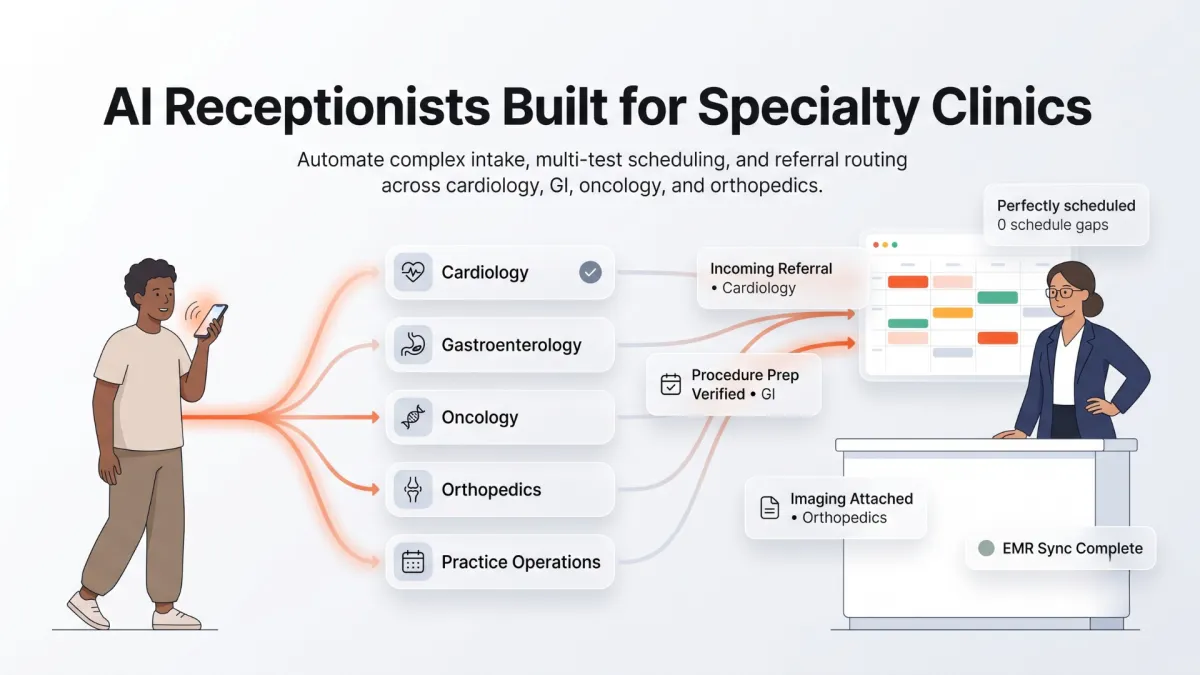
Specialty medical clinics—including cardiology, gastroenterology, oncology, and orthopedics—face unique operational friction due to complex referral intakes, strict scheduling prerequisites, and high call volumes. Generic phone trees and manual front desk call handling lead to missed referrals, delayed care, and staff burnout. Modern AI receptionists solve these specialty-specific challenges by deploying intelligent voice automation that understands clinical context, enforces precise scheduling logic, interfaces with electronic medical record (EMR) systems 24/7, and triages urgent patient inquiries to human staff immediately.
Managing patient communication in a primary care setting is challenging, but in a specialty clinic, the complexity escalates exponentially. Specialty practices do not just take phone calls to book basic fifteen-minute checkups. They process intricate referral documentation, verify prior authorizations, coordinate diagnostic imaging, pre-screen for complex procedural prerequisites, and field calls from anxious patients dealing with serious health conditions.
When a specialty clinic’s front desk is overwhelmed, the entire clinical engine slows down. Sub-specialists are left with empty slots in their schedules because referral intake stalled. Patients awaiting critical consultations hit long hold times or go straight to voicemail. Front desk staff, trapped between managing physical check-ins and an endlessly ringing multi-line phone system, face severe operational burnout.
Generic answering services and legacy interactive voice response (IVR) phone trees are ill-equipped to handle this environment. A rigid system that tells a patient experiencing acute joint pain or post-chemotherapy side effects to "press 1 for appointments" creates friction, delays access to care, and risks patient safety.
Specialty practices require call intake workflows that reflect their actual clinical realities. Modern voice artificial intelligence has reached a level of sophistication where it can understand specialized terminology, execute complex scheduling logic, gather chief complaints, and intelligently route calls based on clinical urgency.
The Hidden Cost of Specialty Call Complexity
In a high-volume specialty practice, no two phone calls are identical. A single incoming line might be a primary care clinic transferring urgent lab results, a post-operative patient reporting unexpected pain, a candidate inquiring about a specialized procedure, or an insurance representative requesting additional documentation.
When human receptionists are forced to triage these varied calls while simultaneously checking in arriving patients, administrative breakdowns are inevitable.
Referrals sit unprocessed in voicemail boxes, giving patients time to contact competing specialty groups.
Complex appointment prerequisites—such as fasting requirements or prior imaging—are omitted during hurried scheduling calls, leading to day-of cancellations.
Patients calling with time-sensitive clinical symptoms are placed on extended hold, creating clinical risk.
High-earning specialists suffer from schedule gaps caused by late cancellations that the front desk did not have the bandwidth to fill.
The root problem is not a lack of staff effort. It is an operational model that relies on manual human labor to route every single incoming inquiry, regardless of its complexity or urgency.
Why Generic Phone Automation Fails Specialty Practices
For years, specialty practices turned to traditional call centers or basic auto-attendants to manage phone overflow. These solutions consistently fail in specialty medicine because they lack context and clinical awareness.
Standard answering services utilize non-medical call agents reading static scripts. They cannot look into an EMR to verify if a patient has completed necessary lab work before booking a procedure. They cannot distinguish between a routine follow-up inquiry and a symptom requiring immediate escalation to an on-call triage nurse.
Similarly, traditional press-button IVRs alienate callers. A patient seeking an urgent consultation for severe abdominal pain does not want to navigate a five-tier menu system.
Specialty medicine requires dynamic, conversational communication. Intake systems must be able to comprehend natural human speech, ask clarifying questions, parse clinical nuances, and apply custom practice rules in real time.
How AI Receptionists Work: The Technical Infrastructure
An AI receptionist is not a simple recording or a rigid decision tree. It is a voice-based artificial intelligence platform designed to handle natural, bi-directional human conversation over the phone.
The system combines advanced natural language processing (NLP), healthcare-specific speech recognition, and deep integration with practice management software.
Natural Speech Recognition: Callers speak in their normal cadence using everyday language. The AI parses intent, context, and sentiment without requiring specific keywords or button presses.
Real-Time EMR Integration: The AI connects directly to systems like Epic, Athenahealth, eClinicalWorks, and NextGen. It reads live provider schedules, checks appointment types, enforces booking rules, and updates patient records instantaneously.
Dynamic Protocol Adherence: Practices define custom operational rules. The AI follows these exact logic paths, ensuring that every caller receives accurate information based on provider preferences, sub-specialty requirements, and clinical guidelines.
Smart Escalation Routing: When a call involves urgent clinical symptoms, complex medical advice, or an unmapped scenario, the AI immediately transfers the caller to designated clinical personnel or logs an urgent triage task.
Specialty-Specific Workflows: How AI Operates Across Disciplines
The true test of an AI receptionist lies in its ability to adapt to the specific administrative and clinical demands of different medical specialties.
Cardiology: Prioritizing Urgency and Complex Triage
Cardiology practices balance high patient volumes with strict clinical safety standards. Phone calls often involve complex medication regimens, post-procedural monitoring, and symptoms that hover between routine concerns and emergency room situations.
Managing Symptom Triage When a patient calls a cardiology practice complaining of shortness of breath, chest tightness, or dizziness, speed and accuracy are paramount. An AI receptionist identifies red-flag clinical keywords immediately. It can be configured to pause routine intake and either warm-transfer the patient directly to an on-call nurse or instruct the caller to dial 911 based on established practice protocols.
Coordinating Multi-Test Appointments Cardiology patient visits frequently require chained scheduling—for example, an echocardiogram or stress test followed immediately by a consultation with the cardiologist. The AI system evaluates provider calendars and equipment room availability simultaneously, booking complex diagnostic sequences without double-booking assets or creating unnecessary patient wait times.
Handling Prescription Refill Requests Cardiology calls are heavily weighted toward prescription updates for blood thinners, anti-hypertensives, and statins. The AI collects structured refill details—including medication name, exact dosage, pharmacy preferences, and current symptoms—and routes the clean summary directly to the prescribing care team for authorization.
Gastroenterology: Automating Prep Instructions and Procedure Booking
Gastroenterology practices depend on high procedural throughput. The financial health of a GI clinic relies on keeping endoscopy suites full while minimizing last-minute procedure cancellations caused by inadequate patient preparation.
Enforcing Procedure Prerequisites Booking a colonoscopy or upper endoscopy requires strict pre-screening. The AI receptionist verifies candidate eligibility over the phone, asking targeted pre-procedure questions regarding age, sedation history, blood thinner usage, and existing medical conditions before placing the patient on the schedule.
Delivering Step-by-Step Prep Guidance Patient non-compliance with bowel preparation is a leading cause of canceled GI procedures. An AI receptionist handles incoming calls from anxious patients asking for prep clarification at any hour of the day. It provides precise, practice-approved instructions regarding clear liquid diets, medication timing, and laxative schedules, ensuring patients arrive fully prepared.
Recapturing Late Cancellations When a GI patient cancels a procedure slot on short notice, the revenue loss for the suite is substantial. Voice AI can automatically contact patients on a waitlist to offer the open slot, filling calendar gaps dynamically without placing manual outbound calling demands on front desk staff.
Oncology: Delivering Empathetic, Highly Structured Support
Oncology practices manage patients undergoing physically and emotionally taxing treatments. Communication in oncology demands exceptional clarity, zero hold times, and seamless coordination between multidisciplinary teams.
Eliminating Phone Barriers for Vulnerable Patients Cancer patients managing chemotherapy or radiation side effects cannot endure ten-minute hold times just to report a fever or request nausea medication. An AI receptionist answers every inbound call on the first ring, greeting the caller calmly and routing urgent side-effect reports directly to the assigned clinical coordinator.
Streamlining Referral and Record Collection New oncology consultations require extensive documentation before the patient can be seen, including pathology reports, diagnostic imaging, and prior treatment records. The AI assists incoming callers by confirming receipt of documentation, sending automated intake links, and guiding referring offices through the record submission process.
Managing Multidisciplinary Schedules Oncology care plans often involve complex scheduling across medical oncologists, surgical oncologists, radiation therapists, and infusion centers. Voice AI handles routine schedule adjustments and confirmation calls, allowing human intake coordinators to focus entirely on personal patient navigation.
Orthopedics: Streamlining High-Volume Referrals and Imaging Intake
Orthopedic practices operate in a high-volume, fast-paced environment characterized by acute injury walk-ins, surgical consults, physical therapy follow-ups, and heavy referral traffic from urgent care centers and primary care clinics.
Capturing Urgent Referral Inquiries When an urgent care clinic or primary care physician refers a patient with a fresh fracture or ligament tear, speed determines where that patient goes. If the patient calls an orthopedic clinic and hits voicemail, they will call another practice. Voice AI captures these high-value referral calls instantly, booking the initial consultation within the practice's designated emergency slot parameters.
Verifying Imaging Prerequisites An orthopedic specialist cannot conduct a meaningful initial consultation for joint pain without recent X-rays or MRI scans. The AI receptionist checks for imaging completion during the scheduling conversation. If the patient has not yet had imaging, the AI provides specific instructions on where to get scans completed prior to the appointment date.
Differentiating Sub-Specialty Routing Orthopedic groups typically feature sub-specialists focusing on specific anatomical areas—such as hand and wrist, spine, total joint replacement, or sports medicine. The AI receptionist asks basic intake questions about the location and nature of the pain, automatically routing the patient to the correct sub-specialist calendar based on practice protocols.
Operational Benefits for Specialty Practice Leadership
Implementing specialized voice AI transforms the operational dynamics of an independent specialty clinic, benefiting physicians, administrators, and administrative staff alike.
Maximizing Provider Schedule Utilization Unfilled appointment slots in specialty medicine represent unrecoverable revenue losses. By answering 100% of inbound calls and enabling 24/7 self-service scheduling, AI receptionists keep provider calendars optimized and reduce open schedule gaps.
Reducing Administrative Overhead and Burnout Front desk turnover in specialty practices is driven by high stress and cognitive overload. When routine phone calls—such as appointment confirmations, directions, and refill requests—are automated, front desk personnel can focus on in-person patient interaction, intake processing, and complex administrative duties.
Improving Patient Acquisition and Retention Modern patients expect immediate responsiveness. A specialty practice that offers instant phone access, 24/7 booking capability, and clear communication gains a significant competitive advantage over regional practices relying on legacy phone infrastructure.
Ensuring Protocol Standardization Human staff members, especially during busy shifts, may occasionally forget to state a scheduling rule or miss a screening question. An AI receptionist executes practice protocols with 100% consistency on every call, ensuring strict adherence to administrative and clinical guidelines.
How Zaya Helps Specialty Practices
Zaya provides an AI-powered phone receptionist built specifically for the operational demands of independent specialty clinics. Designed to integrate directly into existing practice workflows, Zaya eliminates phone bottlenecks, protects provider schedules, and ensures every caller receives immediate, accurate service.
Zaya acts as an intelligent, secure extension of your administrative team, supporting your specialty practice across several core operational capabilities:
Answers every call: Answers 100% of inbound calls instantly on the first ring, completely eliminating hold times, busy signals, and dropped calls 24 hours a day, 7 days a week.
Schedules appointments: Manages complex scheduling workflows for new patients, follow-ups, and consultations based on customized provider rules and sub-specialty requirements.
EMR integration: Connects securely with leading electronic medical record and practice management systems to read real-time availability and write appointment data directly to your calendar.
Appointment changes: Handles cancellations, reschedules, and visit confirmations automatically, freeing up calendar slots for other patients without staff intervention.
Prescription refill requests: Gathers structured medication and pharmacy details from callers, organizing the information into clean requests for clinical team review.
Referral handling: Processes inbound patient and physician referral inquiries efficiently, gathering necessary demographic details and routing information to your intake department.
Multilingual conversations: Communicates naturally in multiple languages, expanding access for diverse patient populations across your community.
AI-generated summaries: Generates concise written call transcripts and structured summaries, giving your staff instant context for every interaction.
After-hours support: Delivers full booking and informational functionality outside standard clinic hours, capturing evening and weekend call traffic that would otherwise be lost.
By handling high-volume call management automatically, Zaya allows your front desk staff to deliver exceptional in-person care while ensuring your specialty clinic operates at peak efficiency.
Frequently Asked Questions
How is an AI receptionist different from a traditional answering service?
Unlike traditional answering services that rely on scripted agents, an AI receptionist understands natural conversations, follows your specialty-specific workflows, and integrates directly with your EMR and scheduling system. It can gather referral information, verify appointment prerequisites, schedule complex visits, and escalate urgent calls according to your practice's protocols.
Can an AI receptionist handle the unique workflows of different medical specialties?
Yes. AI receptionists can be customized for specialty-specific requirements. Whether it's coordinating multi-test cardiology appointments, verifying colonoscopy preparation, routing oncology side-effect calls, or confirming orthopedic imaging before consultations, the AI follows workflows tailored to your practice.
How does the AI know when a call should be transferred to clinical staff?
The AI is configured using your practice's escalation rules. It listens for symptoms, keywords, or situations that require immediate attention and can instantly transfer the caller to a nurse, care coordinator, or on-call provider while continuing to handle routine administrative calls independently.
Will the AI integrate with our existing EMR or practice management software?
Yes. Zaya integrates with leading healthcare platforms to access real-time provider availability, apply scheduling rules, document appointments, and support efficient referral and patient management without disrupting your existing workflow.
How does an AI receptionist improve efficiency for specialty clinics?
By answering every call, automating scheduling, managing referral intake, handling appointment changes, and reducing administrative workload, AI helps eliminate phone bottlenecks, minimize scheduling gaps, reduce staff burnout, and ensure patients receive timely, consistent service.
Ready to Modernize Your Specialty Clinic?
Specialty clinics operate in a far more complex environment than general medical practices. Every phone call may involve referrals, diagnostic requirements, procedure preparation, prescription requests, or clinically sensitive concerns that require accurate routing and timely responses.
An AI receptionist built for specialty care helps simplify these complexities without compromising the patient experience. By automating routine administrative tasks, supporting specialty-specific workflows, integrating with your EMR, and ensuring every call is answered promptly, AI enables your staff to spend less time managing phones and more time supporting patients.
Whether your practice specializes in cardiology, gastroenterology, oncology, orthopedics, or another specialty, Zaya provides the intelligent communication infrastructure needed to improve operational efficiency, reduce administrative burden, and keep your providers' schedules running at full capacity. When every patient call is handled with speed, accuracy, and consistency, your clinic is better positioned to deliver exceptional care while continuing to grow.
Talk to Zaya
Experience the difference. Tap the microphone to start a natural conversation with our AI right now.
You'll need to allow microphone access to start the demo.