
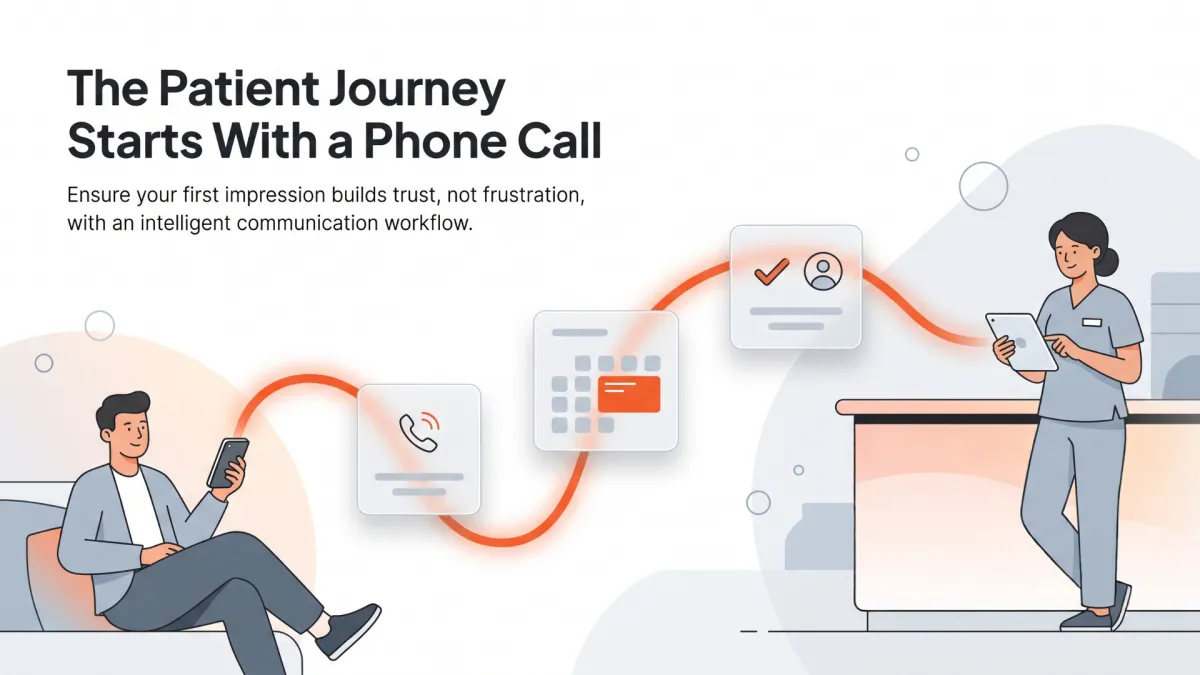
The Patient Journey Starts With a Phone Call
The first interaction a patient has with your medical practice is usually a phone call, and it sets the tone for their entire experience. A poor phone experience leads to lost revenue, negative reviews, and frustrated patients, while also contributing to severe staff burnout. By identifying where front desk operations break down and implementing a better communication strategy—often through the strategic use of an AI phone receptionist—independent medical practices can capture every opportunity, improve patient satisfaction, and allow their in-house team to focus on high-value, in-person care.
Calling a medical practice is rarely a casual activity. When a patient dials your number, they are usually dealing with a specific need, a lingering worry, or a logistical hurdle regarding their health. They might be calling to schedule a necessary screening, asking for a critical prescription refill, or trying to find out if your office accepts their new insurance.
Whatever the reason, that phone call is the absolute beginning of their healthcare journey with your practice.
Yet, in many independent medical practices, this crucial first touchpoint is broken. The patient dials the number and is met with a busy signal. If they do get through, they are immediately placed on a long, silent hold. When a staff member finally picks up, the conversation is rushed, breathless, and strictly transactional. The patient feels like an interruption rather than the priority.
Practice owners invest heavily in clinical excellence, modern facilities, and advanced technology to provide the best possible care. But if the front door to the clinic—the phone lines—is jammed, chaotic, or uninviting, none of those clinical investments matter to the patient who simply gives up and calls a competitor. The phone experience dictates patient perception long before they ever step into your waiting room.
The First Touchpoint Sets the Tone
Human beings are wired to form impressions quickly. In a healthcare setting, those initial impressions carry enormous weight because the foundation of medical care is trust.
Patients subconsciously evaluate the quality of care they will receive based on the administrative competence they experience over the phone. If a practice cannot smoothly handle a basic appointment scheduling request, the patient naturally wonders how that same practice will manage complex medical records, lab results, or billing issues.
Clinical excellence and operational excellence are viewed as one and the same by the average patient.
When a front desk operates smoothly, the patient feels a sense of relief. A calm, professional, and helpful phone interaction signals that the practice is organized, capable, and ready to help. It lowers the patient's anxiety and builds immediate confidence in the physician they are about to see.
Conversely, a chaotic phone experience sends a very different signal. When a patient is placed on hold for ten minutes, only to be transferred to a voicemail box that is full, they feel neglected. Even if the doctors inside the clinic are the top specialists in their field, the patient's reality is shaped by the friction they experienced just trying to get an appointment.
This initial touchpoint is not just an administrative hurdle. It is the beginning of the clinical relationship. Getting it right is essential for building long-term patient loyalty.
Why the Phone Experience Matters More Than Ever
The landscape of independent healthcare has shifted significantly over the last decade. Patients have more choices, higher expectations, and less patience for operational friction. Understanding why the phone experience carries so much weight requires looking at the broader trends affecting medical practices today.
The Consumerization of Healthcare Patients now expect the same level of seamless service from their doctor’s office that they receive from consumer brands, airlines, and hospitality companies. They are accustomed to instant answers, easy online booking, and responsive customer service. When a medical practice forces them to endure long holds or repetitive phone menus, it feels glaringly outdated.
The Impact of Online Reviews A practice's reputation is entirely transparent. When patients have a poor experience, they rarely complain about the physician's clinical skills. Instead, they write negative reviews about the operational failures. Common themes in negative healthcare reviews include:
Inability to reach anyone on the phone
Unreturned voicemails
Rude or rushed front desk staff
Confusion over billing and insurance verification
A cluster of negative reviews focused on front desk operations will actively deter prospective patients from calling in the first place.
The Hidden Cost of Missed Calls Every missed call represents a potential loss for the practice. While some callers will leave a voicemail or call back later, many will not. A new patient seeking a primary care physician or a specialist will simply move down their list of in-network providers and call the next office.
The financial impact of a single missed new patient call is not just the value of one appointment. It is the loss of the lifetime value of that patient, plus any referrals they might have generated over the years. When phone lines go unanswered during busy periods or after hours, practices are quietly leaking revenue.
Staff Burnout and Retention The phone experience matters just as much for your internal team as it does for your patients. A ringing phone that never stops is a significant source of stress for medical receptionists. When staff are overwhelmed by call volume, their job satisfaction plummets, leading to higher turnover rates. Constantly hiring and training new front desk staff creates a vicious cycle that further degrades the patient experience.
Where Front Desk Operations Break Down
To fix a broken phone experience, it is necessary to understand exactly why it breaks down in the first place. In most independent medical practices, the failure is not a lack of effort from the staff. It is a fundamental flaw in how the work is structured.
Medical receptionists are asked to perform an impossible balancing act. Their core responsibilities pull them in two entirely different directions: serving the patient standing in front of them and serving the patient calling on the phone.
The Multitasking Myth Imagine a typical morning at the front desk. A receptionist is checking in a new patient. They need to scan an ID, verify insurance details, collect a copay, and hand the patient intake forms. This process requires focus and interpersonal warmth.
Mid-sentence, the phone rings.
The receptionist must now interrupt the in-person patient, answer the phone, place the caller on hold, and return to the check-in process. By the time they get back to the caller, another line is ringing.
This constant context switching leads to errors, frustration, and a rushed tone of voice. No one gets excellent service. The in-person patient feels ignored, and the calling patient feels like a nuisance.
Call Volume Spikes Phone traffic in a medical office is rarely consistent. It arrives in overwhelming waves.
Monday mornings are notoriously busy with patients calling to schedule appointments after getting sick over the weekend.
The lunch hour often sees a spike as working patients use their break to call their doctor, which directly conflicts with the front desk staff's own lunch schedules.
The end of the day brings a rush of calls regarding prescription refills and lab results before the office closes.
During these spikes, even the most well-staffed front desk cannot keep up. Calls inevitably spill over into voicemail, creating a backlog of work that staff must address later, often leading to unreturned calls and angry patients.
The Burden of Routine Questions Not all phone calls require human empathy or complex problem-solving. A significant portion of daily call volume consists of highly repetitive, routine inquiries. Patients call to ask about:
Office hours and location directions
Whether specific insurance plans are accepted
How to access the patient portal
Confirmation of appointment times
Basic requests for prescription refills
When human staff are forced to answer these same questions dozens of times a day, it drains their time and energy. It prevents them from dedicating their attention to the calls that actually require human intervention, such as a patient experiencing alarming symptoms or a referring physician needing to consult with the doctor.
Building a Better Patient Communication Strategy
Improving the patient journey requires a deliberate strategy. Practices cannot simply demand that their front desk staff "answer the phones faster." Instead, they must redesign the communication workflow to reduce bottlenecks and prioritize patient care.
Separate the Roles When Possible If staffing and space allow, the most effective operational change a practice can make is separating the check-in desk from the phone station.
Having dedicated staff members handle in-person check-ins and check-outs ensures that patients in the waiting room receive undivided attention. Meanwhile, a separate team member located away from the front desk handles incoming calls. Removing the visual pressure of a line of patients waiting to check in allows the phone operator to focus entirely on the caller.
Standardize Call Workflows Front desk staff should not have to reinvent the wheel for every phone call. Practices should develop clear, standard operating procedures for the most common call types.
Create simple, accessible guidelines for:
How to handle urgent medical questions versus routine scheduling
The exact information required before sending a prescription refill request to the clinical team
How to properly verify insurance eligibility over the phone
The protocol for handling frustrated or difficult callers
Standardization speeds up call resolution times and ensures that patients receive consistent, accurate information regardless of who answers the phone.
Audit Your Call Data You cannot improve what you do not measure. Practice managers should regularly audit their phone systems to understand the reality of their call volume.
Look for key metrics:
What are the peak hours for incoming calls?
What is the average hold time?
How many calls are abandoned (the patient hangs up before anyone answers)?
How many calls go to voicemail during business hours?
What is the volume of after-hours calls?
Understanding these metrics allows practices to adjust staff schedules, ensuring adequate coverage during the busiest times of the day.
Eliminate the Voicemail Black Hole Patients despise leaving voicemails. They often feel their message goes into a void, never to be heard.
Practices must establish strict policies regarding voicemail. If calls must go to voicemail during lunch hours, the outgoing greeting should set a clear expectation for when the call will be returned (e.g., "We will return your call by 3:00 PM today"). More importantly, staff must rigorously adhere to that timeline. A returned call is a kept promise; an unreturned call is a broken one.
The Business Impact of Fixing the Phones
When a medical practice successfully optimizes its phone operations, the benefits extend far beyond a quieter front desk. A streamlined communication strategy fundamentally improves the health of the business.
Increased Revenue Capture When every call is answered promptly, practices capture the revenue that was previously slipping through the cracks. New patients who would have hung up after a long hold are seamlessly scheduled. Existing patients who might have delayed care due to the hassle of calling are able to book their follow-up appointments easily.
Every answered call is a protected opportunity.
Reduced No-Show Rates A disorganized front desk often struggles to maintain a consistent appointment reminder process. When the phone system is optimized, patients can easily call to reschedule or cancel appointments in advance, rather than simply not showing up. This allows the practice to fill those vacant slots with patients from a waitlist, protecting the provider's schedule and the clinic's daily revenue.
Improved Staff Morale and Retention Burnout is a massive issue in healthcare administration. When you remove the constant, ringing pressure of an overloaded phone system, the front desk environment transforms.
Staff members can breathe. They can take their time to properly verify insurance, resulting in fewer billing denials. They can greet in-person patients with a genuine smile instead of a stressed grimace. When staff feel supported rather than overwhelmed, they stay in their jobs longer, saving the practice the immense cost and disruption of constant turnover.
Enhanced Practice Reputation Patients notice when an office is run well. When they experience a prompt, polite, and efficient phone interaction, they are more likely to leave positive reviews online. They become advocates for the practice, recommending the physician to their friends and family. A strong reputation for operational excellence becomes a powerful marketing asset that drives organic growth for the clinic.
How AI is Reshaping the Medical Front Desk
While separating roles and auditing data are excellent structural steps, many independent practices simply do not have the budget to hire additional staff just to answer phones. This is where artificial intelligence is fundamentally changing the landscape of medical administration.
The concept of an AI phone receptionist is no longer science fiction. It is a practical, highly effective reality that is solving the exact operational bottlenecks that plague medical offices.
Beyond the Traditional Phone Tree It is important to distinguish modern AI from the frustrating automated phone systems of the past. Traditional IVR (Interactive Voice Response) systems force patients to navigate rigid menus ("Press 1 for scheduling, Press 2 for billing"). These systems are universally disliked because they are slow, confusing, and impersonal.
Modern AI, however, is conversational. It understands natural human language. A patient can simply call and say, "Hi, I need to see the doctor next week because my back is hurting, and I also need a refill on my muscle relaxers." The AI understands the dual intent of the request, processes the information, and responds in a natural, conversational voice.
Handling the Routine, Escalating the Complex The primary function of a medical AI receptionist is to act as the ultimate triage system. AI is perfectly suited to handle the high volume of routine calls that drain staff time.
It can expertly manage:
Booking, canceling, and rescheduling appointments
Providing basic practice information (hours, location, fax numbers)
Collecting details for prescription refill requests
Answering basic questions about accepted insurance
By autonomously handling these tasks, the AI acts as a shield for the front desk. It filters out the noise. When a patient calls with a complex medical issue, an urgent symptom, or a complicated billing question, the AI recognizes the complexity and immediately routes the call to the appropriate human staff member.
24/7 Availability Illness does not operate on a 9-to-5 schedule. Patients frequently need to contact their doctor after hours, on weekends, or during holidays. Human staff must go home, but an AI receptionist never sleeps.
AI provides practices with a reliable, intelligent answering service around the clock. Instead of forcing patients to deal with a generic third-party answering service that can only take messages, AI can actively assist the patient, schedule a next-day appointment, or route genuine emergencies to the on-call physician based on strict, predefined protocols.
How Zaya Helps Independent Practices
For independent medical practices looking to fix their patient communication without drastically increasing overhead, Zaya provides a comprehensive, intelligent solution. Zaya is an AI-powered receptionist built specifically for the unique workflows of healthcare.
By integrating seamlessly into your practice, Zaya ensures that the patient journey starts perfectly, every single time.
Answers Every Call Immediately With Zaya, the busy signal and the long hold time are eliminated. Zaya answers every incoming call on the first ring, even during your busiest Monday morning rushes. Whether you have one caller or ten calling simultaneously, Zaya provides immediate, professional attention to each patient.
Schedules Appointments Directly Zaya doesn't just take messages; it takes action. Through deep EMR integration, Zaya can view your practice's real-time availability and schedule appointments directly on the calendar. Patients can book, modify, or cancel their visits conversationally, exactly as they would with a human receptionist.
Manages Routine Clinical Requests Zaya efficiently handles the repetitive tasks that bog down your front desk. It can collect all the necessary information for prescription refill requests and organize it for your clinical team to review. It can also assist with referral handling, ensuring specialists get the information they need without tying up the phone lines.
Multilingual Conversations In diverse communities, language barriers can create significant friction in patient communication. Zaya easily conducts multilingual conversations, allowing patients to interact with your practice in their preferred language, ensuring clear communication and a more welcoming patient experience.
Actionable AI-Generated Summaries After every interaction, Zaya provides AI-generated summaries of the call. Your staff can quickly review a concise, accurate log of what was discussed, what actions were taken, and if any follow-up is required, ensuring nothing falls through the cracks.
Reliable After-Hours Support Zaya extends your practice's capabilities long after the front door is locked. Providing intelligent after-hours support, Zaya ensures patients can always reach your office to schedule future appointments or leave detailed messages, replacing expensive and often inefficient traditional answering services.
Frequently Asked Questions
Can AI replace medical receptionists?
No. The goal of an AI phone receptionist is to augment your staff, not replace them. By handling routine tasks like basic scheduling and answering common questions, AI frees your human receptionists to focus on in-person patient care, complex billing issues, and tasks that require genuine human empathy.
How does AI schedule appointments?
AI phone receptionists integrate directly with your practice's existing Electronic Medical Record (EMR) or scheduling software. The AI reads the real-time calendar availability, offers open slots to the patient during the conversation, and securely writes the new appointment directly into your system.
Is an AI phone receptionist HIPAA compliant?
Yes, purpose-built medical AI receptionists are designed with strict security protocols to ensure full HIPAA compliance. Audio recordings, call transcripts, and patient data are encrypted and securely stored, ensuring that patient health information (PHI) is protected at all times.
Can the AI handle after-hours calls?
Absolutely. AI receptionists operate 24/7/365. They can answer calls after the office is closed, help patients schedule appointments for the following days, answer basic questions, and follow your specific triage rules for routing urgent medical situations to an on-call provider.
Do independent private practices actually benefit from AI?
Yes. Independent practices often struggle with staffing limitations and tight budgets. An AI receptionist provides enterprise-level call management without the cost of hiring additional full-time staff, allowing independent clinics to punch above their weight and deliver an exceptional patient experience.
Every Call Matters
The patient journey does not begin in the exam room. It begins the moment a patient decides they need medical help and picks up the phone.
If that initial interaction is marked by frustration, long holds, and rushed conversations, the practice suffers. Patients lose trust, staff burn out, and revenue is lost. However, when a practice treats the phone experience as a critical component of patient care, everything changes. The front desk becomes a calm, organized environment. Patients feel valued and respected from the very first hello.
You cannot provide excellent medical care if patients cannot easily reach you to access it. Support your team by giving them the tools they need to manage the workflow, rather than letting the workflow manage them.
Grow your practice by converting more of the opportunities you already have. By streamlining communication and utilizing intelligent tools like Zaya, independent medical practices can ensure that every single phone call is a step toward better patient care and a healthier business.
Talk to Zaya
Experience the difference. Tap the microphone to start a natural conversation with our AI right now.
You'll need to allow microphone access to start the demo.