
AI Answering Service vs Live Virtual Receptionist
When a medical practice needs help with the phones, two options can sound similar: an AI answering service and a live virtual receptionist. Both answer calls outside your physical office. The difference is who handles the conversation and what they can complete before the caller hangs up.
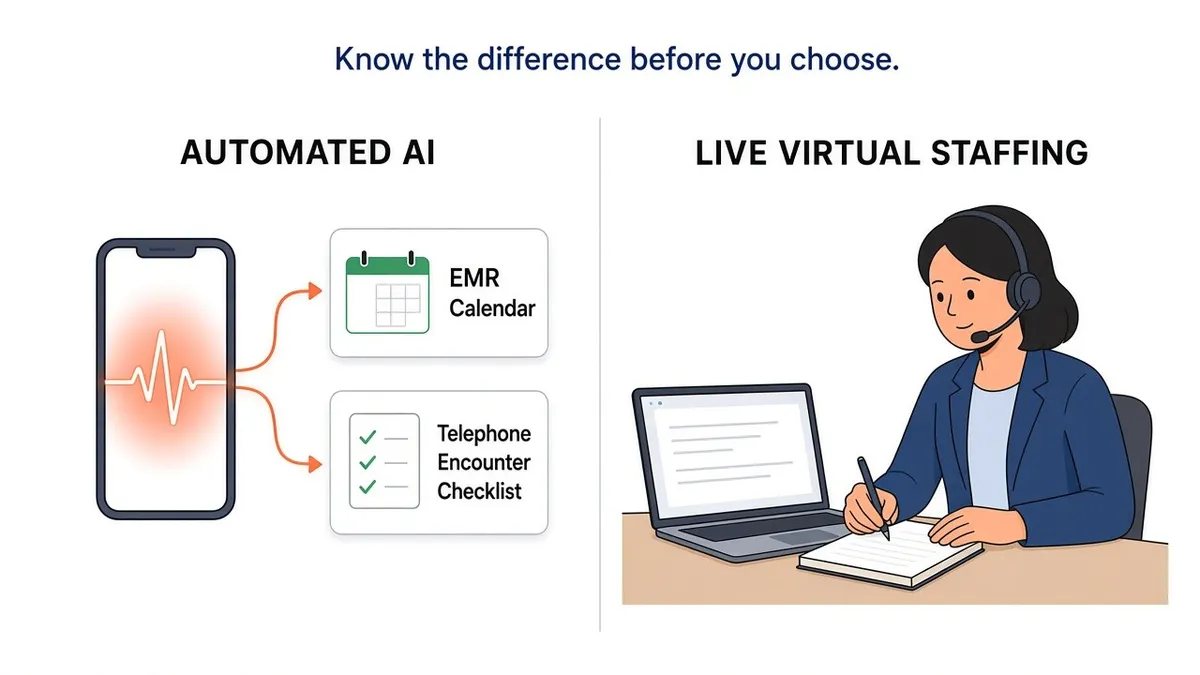
An AI answering service uses software to speak with callers and carry out configured tasks. A live virtual receptionist service supplies remote people who answer on your practice's behalf. Zaya Health is an automated AI answering service.
For a practice manager, the choice starts with the work you need covered. Routine appointment calls, complex conversations, and messages for clinicians each place different demands on a service. A clear comparison should account for the work left for your own team afterward.
What each service actually provides
Automated AI answering
An AI answering service talks with patients in a phone conversation. Its usefulness depends on its connection to your systems and the tasks configured for your practice.
Zaya verifies existing patients by name and date of birth, checks availability in your EMR, books appointments directly in the schedule, and adds telephone encounters. Requests requiring staff review can be documented and sent into the EMR or another protected system agreed during setup.
The practical distinction is between a completed administrative task and a captured request. Both are useful, but only the first removes the need to finish that task later.
A live virtual receptionist staffing service
A live virtual receptionist is a remote person supplied through a staffing or answering service. Depending on the agreement, that person may take messages, answer administrative questions, or work in your scheduling system.
Do not assume that every live service offers the same access or scope. Ask whether receptionists are dedicated or shared, how they learn your procedures, and which actions they are authorized to take. A person can handle a nuanced conversation, but they still need clear instructions and access to complete the work.
Compare the actual workflow
| Question | Automated AI answering service | Live virtual receptionist service |
|---|---|---|
| Who answers? | Software conducts the conversation | A remote receptionist speaks with callers |
| How are appointments handled? | EMR-connected services can book within configured rules | Booking depends on system access, training, and contract scope |
| What sets coverage? | Confirm phone routing and configured coverage windows | Confirm staffed hours, holiday coverage, and backup arrangements |
| What happens with exceptions? | Captures requests outside its scope for staff review | May resolve administrative exceptions within delegated authority |
| How is work documented? | Confirm chart documentation and message destinations | Confirm entry procedures and where messages are delivered |
| Who handles clinical decisions? | Your authorized clinical team | Your authorized clinical team |
Neither label tells you everything. A polished conversation is only part of the evaluation. You also need to see what reaches the chart and what remains on the callback list.
Compare one scheduling call from start to finish
Use the same sample request with each vendor: an existing patient wants a routine follow-up visit next week. This is a test scenario, not a patient result.
For an EMR-connected AI service, ask to see identity verification, available times, the completed booking, and the call documentation. With a live service, ask the receptionist to demonstrate the same steps using the access they would actually receive.
Then change the request. Make the preferred provider unavailable or ask for a visit type that requires staff approval. A useful demonstration shows how the service records the exception and explains the next step to the caller.
Our guide to an EMR-integrated answering service explains why the connection matters. A promise to pass along an appointment request is different from a visit already entered on the schedule.
Look closely at the work that comes back
Your staff will still handle some requests with either option. Refill approvals, clinical questions, billing disputes, and unusual scheduling needs may all require practice follow-up.
For those calls, ask where the information lands and who is expected to act. If a message sits in an unfamiliar portal, someone must remember to retrieve it. If a request enters the EMR, someone still needs to review it and complete the next step.
For Zaya, plan around documented requests and staff follow-up for work outside the configured scope. Decide who checks each message type and what callers should hear about response timing. Do the same exercise for a live service rather than assuming the remote receptionist can resolve every issue.
Check coverage and cost against your own needs
Write down the periods that need help: opening, lunch, evenings, weekends, holidays, or staff absences. Ask each vendor how those periods are covered and what happens when call demand changes.
With AI coverage, confirm how calls reach the service through your phone system. With a staffing service, confirm the staffing arrangement, backup coverage, and any limits in the contract.
Request pricing for the same scope. Include setup, coverage hours, usage terms, EMR access, and the work your team will still perform. A quote alone will not show whether staff must re-enter messages or call back patients whose appointments could have been booked during the original call.
Patient information and clinical boundaries
For either model, include the BAA, access permissions, identity verification, and message handling in your review. Ask how patient information is protected and which systems staff or software will use.
Remote receptionists are not automatically clinical staff. AI answering is not clinical assessment. Refill requests need authorized review, and callers with clinical concerns need your practice's established process.
Write down the on-call instructions and emergency message before go-live. Callers experiencing a medical emergency should call 911. Routine message review should never be presented as immediate clinical help.
Which option fits your practice?
AI answering may fit when many calls follow repeatable rules and you want EMR-connected booking during overflow or after hours. A live virtual receptionist may fit when you need remote administrative staff to handle conversations that require more interpretation within delegated authority.
Let your actual call mix guide the choice. Ask your front desk to identify frequent requests, recurring exceptions, and the places where callbacks pile up. Then have each vendor demonstrate those workflows.
Frequently asked questions
Is Zaya Health a live virtual receptionist service?
No. Zaya Health is an automated AI answering service that handles configured phone tasks and documents requests needing practice follow-up.
Can a live virtual receptionist book appointments?
Some services can, depending on the contract, training, and access to your scheduling system. Ask the vendor to demonstrate booking in the workflow it will use for your practice.
Can AI answering complete a scheduling request?
Yes, when the service is connected to your EMR and the request fits the configured booking rules. Zaya can check availability and book directly in the EMR.
Who handles clinical questions with either service?
Your authorized clinical team remains responsible for clinical assessment and decisions. Both service models need clear instructions for documenting concerns and explaining your practice's follow-up process.
Try the calls your team handles
Call our demo line at (713) 597-5176 and try a routine appointment request. If you would like to review how automated answering would fit your schedule and message workflow, book a demo.