
Can AI Replace a Medical Receptionist?
A medical receptionist does much more than answer the phone. They welcome patients, notice when someone at the window needs help, sort out paperwork, and keep the day moving when the schedule changes. They also answer the same routine phone requests while all of that is happening.
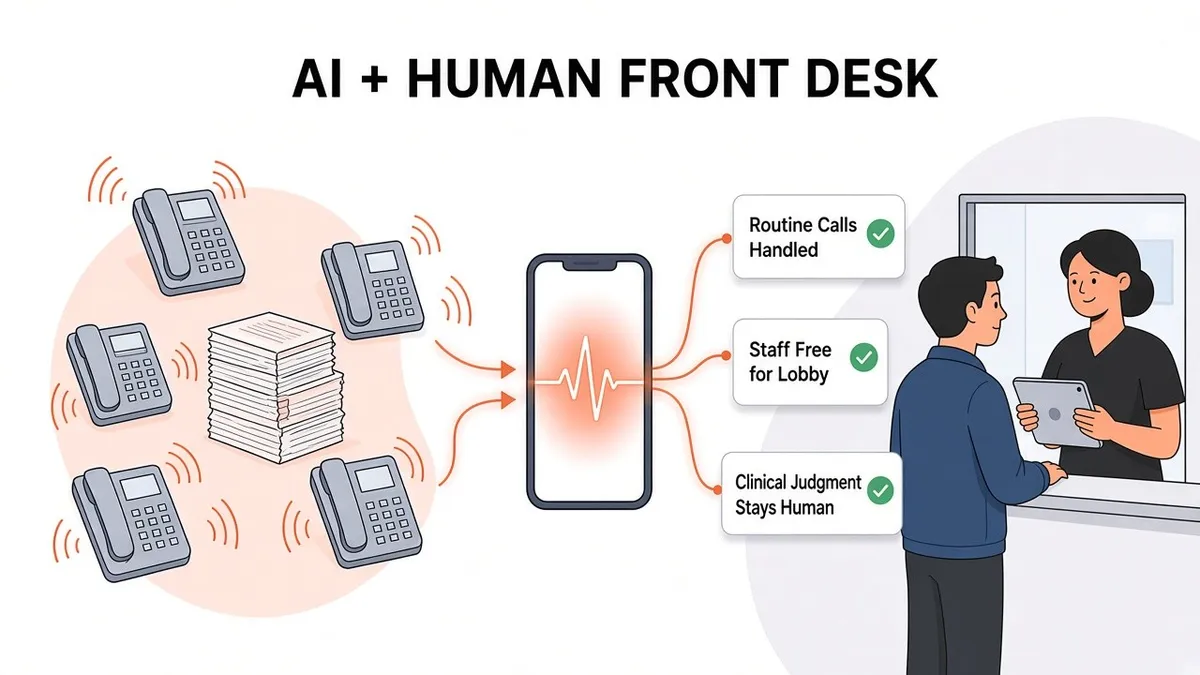
So, can AI replace a medical receptionist? It can take on parts of the phone workload. It cannot take over the whole front desk role. For a practice manager, the useful question is which tasks can be completed reliably by an AI answering service and which should stay with people.
That distinction matters when you plan staffing. A system that books routine appointments may give your team more room to handle patients in the office. It does not remove the need for someone to handle an upset caller, resolve an unusual scheduling request, or recognize when clinical judgment is needed.
Start with the work, not the job title
Before changing coverage, look at the calls your team handles during an ordinary week. Separate requests that follow a clear process from requests that require interpretation or an exception.
A routine follow-up appointment can follow written rules about visit type, provider, and available times. A patient who needs several visits coordinated around transportation may need someone to work through the details. Both calls are about scheduling, but they create different kinds of work.
The same distinction applies to refills. Collecting a medication name and a callback number is an administrative task. Deciding whether the prescription should be renewed belongs with the authorized care team.
For a broader look at routine phone work, see our guide to reducing front desk phone workload.
What AI can handle on routine calls
An EMR-connected AI answering service can do more than record a voicemail. With Zaya Health, the phone workflow includes verifying an existing patient by name and date of birth, checking availability, booking appointments directly in your EMR, and documenting calls as telephone encounters.
For requests that need staff attention, Zaya collects details and sends a message into the EMR or another protected system agreed with your practice. The request still needs an owner, but staff can begin with documented information.
Scheduling within clear rules
Routine booking is a practical place to start. Your practice defines which appointments are suitable for the service, which providers can be booked, and which requests need review. The EMR connection lets the service work with actual availability.
That matters during lunch coverage and after closing. If an eligible appointment is booked during the call, your team does not need to call the patient back just to offer a time.
Refill requests and messages
AI can collect a refill request and document it for review. It should not tell a patient that a prescription has been approved or sent simply because the request was recorded.
Messages for the care team work the same way. Capturing the question is useful administrative work. Answering a clinical question remains the responsibility of qualified staff.
A practical split of responsibilities
| Task | AI answering service role | Human responsibility |
|---|---|---|
| Routine appointment booking | Check availability and book within configured rules | Define rules and resolve exceptions |
| Refill request | Collect and document the request | Review and authorize any prescription action |
| Message for the care team | Record details in the agreed workflow | Review, respond, and close the request |
| Patient arrival | Phone coverage can reduce interruptions | Welcome patients and manage check-in |
| Complex scheduling | Capture the request for follow-up | Coordinate exceptions and competing needs |
| Clinical concern | Record the concern and give approved process instructions | Assess the concern and decide on care |
This split gives you a way to assess the service without treating a receptionist's entire job as one automatable task.
Where your front desk still matters
In-office work needs people who can respond to what is happening around them. A patient may arrive confused about a form. A caregiver may need help understanding the next administrative step. A provider may ask the front desk to rearrange the afternoon.
Those situations involve context that a phone system does not have. Your staff also maintain relationships with patients who know them and trust them to help navigate the practice.
Complex calls need similar attention. A disputed bill, a complaint, an identity mismatch, or an appointment request outside your rules should have a defined staff follow-up process. The goal is to avoid leaving the patient with a vague promise that someone might call.
Give unfinished requests an owner
Moving a call out of the phone queue does not mean the work is finished. A booked appointment and a documented clinical question have different end points.
Before launch, decide:
- Who checks incoming messages during business hours.
- Who reviews requests received overnight or over the weekend.
- Which booking exceptions need a callback.
- How staff record that a request has been handled.
- What callers are told about expected follow-up.
Keep urgent concerns separate from the routine message queue. Your practice should define its on-call instructions, and emergency messaging should direct callers to 911. AI phone coverage does not make the practice an emergency service or provide clinical assessment.
Introduce it as support for the team
Ask reception staff which calls interrupt their work most often. Their answers help identify a sensible first scope, such as routine scheduling during overflow periods or after hours.
Then test ordinary calls and exceptions before relying on the workflow. Try an eligible follow-up visit, an unavailable appointment, an unclear patient match, and a refill request. Check both what the caller hears and what appears in the EMR.
Zaya setup typically takes about two weeks. Use that period to document booking rules and message ownership. Review the BAA and the agreed handling of patient information as part of onboarding. Our AI receptionist safety guide covers questions to bring to that discussion.
After launch, review whether routine bookings are complete and whether staff can find requests that still need attention. Use that review to improve the workflow before making staffing decisions.
Frequently asked questions
Can AI replace an entire medical receptionist role?
No. AI can handle defined routine phone tasks, while people remain responsible for in-office service, complex requests, exceptions, and clinical judgment.
Can an AI receptionist approve prescription refills?
No. It can collect and document a refill request for the care team. Approval and prescribing decisions remain with authorized clinical staff.
What happens when a request needs a person?
Zaya records the details in the agreed message workflow for staff review. Your practice needs to assign ownership and tell callers what follow-up to expect.
Is AI phone coverage useful if we keep our reception staff?
Yes. Routine phone coverage can help staff focus on patients at the window and on requests that require a person, including during busy periods and after hours.
Hear how the workload split sounds
Try a routine scheduling request and a request that needs staff review. Call our demo line at (713) 597-5176 to hear the conversation. If you would like to map those calls to your own front desk workflow, you can book a demo.